FITFLOW
A scalable management platform for fitness studios featuring interactive scheduling, client and staff management, and real-time analytics. Built with modern web technologies and cloud infrastructure to ensure performance, reliability, and growth readiness.
Phase 01
PROJECT OVERVIEW
FitFlow Manager is a comprehensive management platform created to simplify and modernize the way fitness studios operate. The project was designed with one clear goal in mind — to help studio owners and managers stay fully in control of their business without dealing with complex systems, manual processes, or technical barriers.
Fitness studios often rely on multiple tools to handle schedules, trainers, client bookings, payments, and reports. This leads to scattered information, missed updates, and unnecessary administrative work. FitFlow Manager solves this problem by bringing all essential studio operations into one unified and easy-to-use workspace.
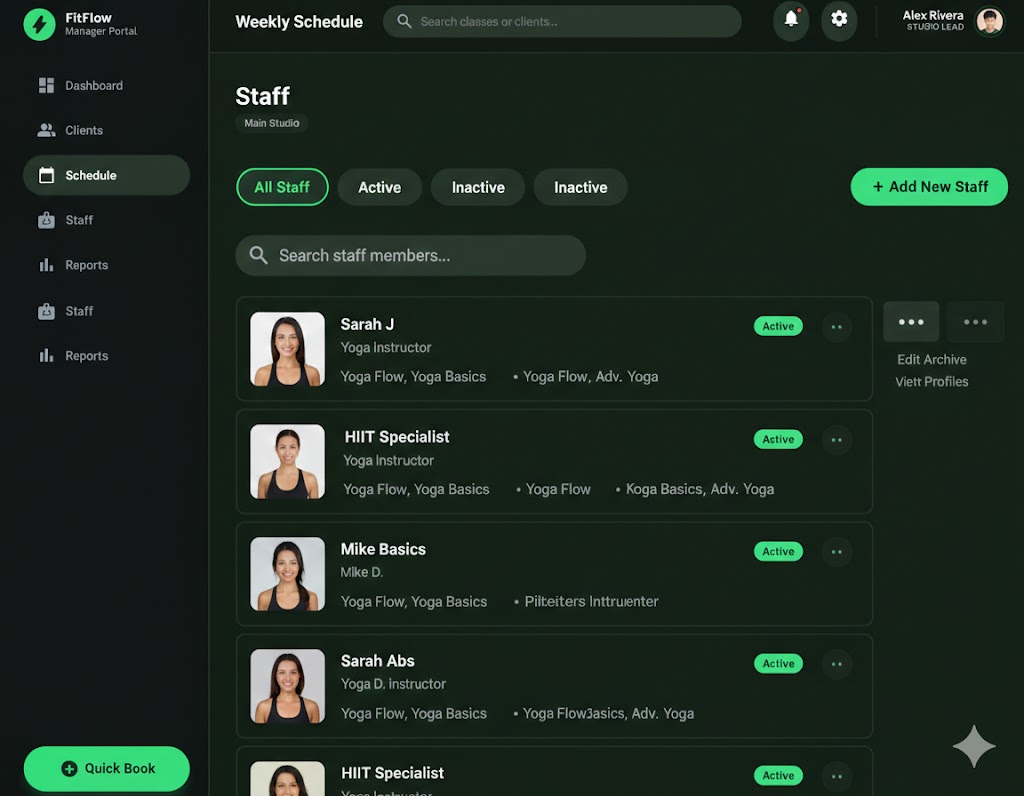
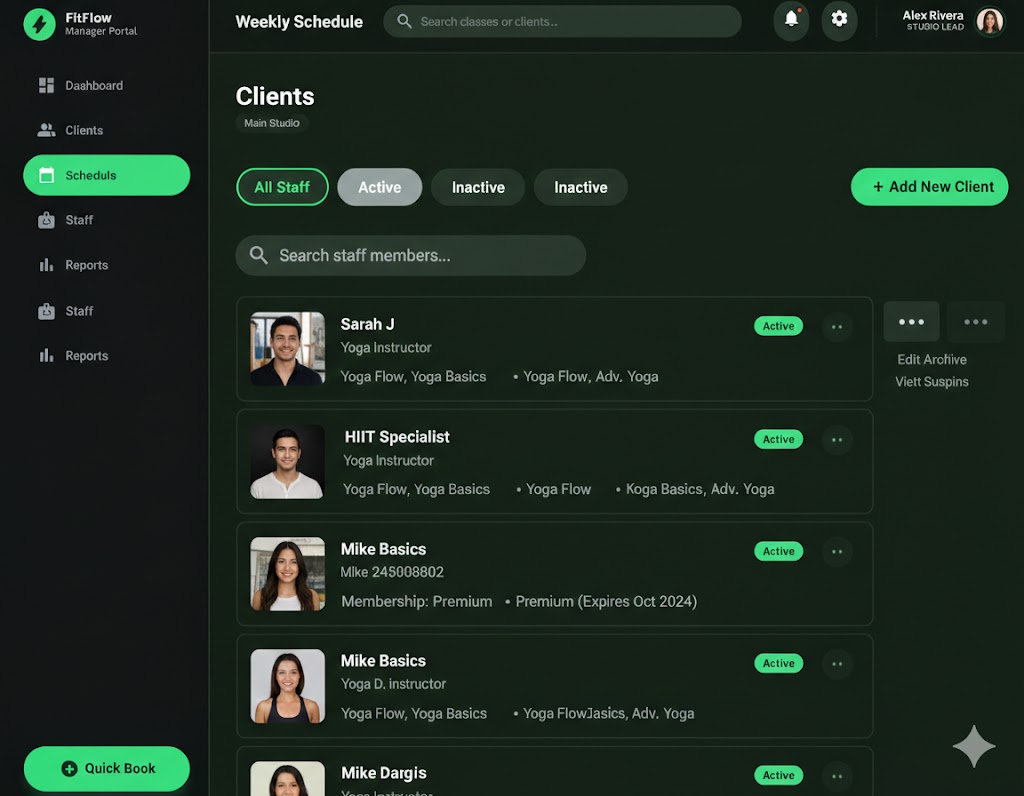
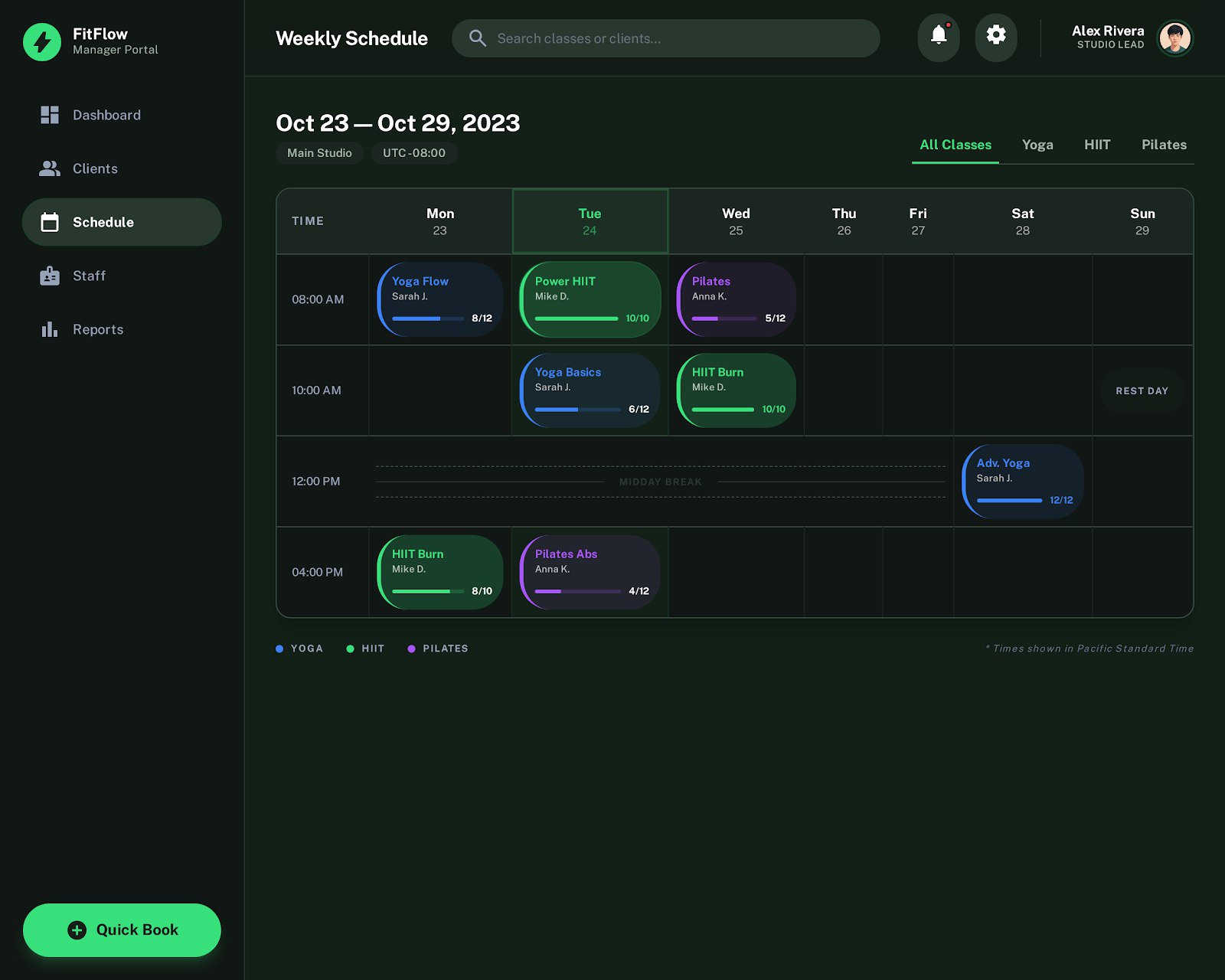
The platform allows managers to plan and adjust class schedules, manage trainers and staff availability, and handle client bookings in real time. Any change made in the system is instantly reflected across the platform, ensuring that both staff and clients always see the most up-to-date information. This reduces confusion, prevents scheduling conflicts, and improves overall studio efficiency.
FitFlow is designed specifically for non-technical users. The interface is clean, visually clear, and easy to understand from the first interaction. Managers do not need training or technical knowledge to start using the system. Daily tasks such as adding classes, assigning trainers, or checking attendance can be completed quickly and intuitively, even during busy working hours.
A key focus of the project is visibility and clarity. FitFlow provides managers with a clear overview of studio activity at any moment. Class occupancy, trainer workloads, and client engagement are easy to track, helping managers understand what is working well and where improvements are needed. This visibility supports better planning, smarter decision-making, and more balanced workloads for staff.
The platform also supports long-term business growth. FitFlow is built to work just as well for a single fitness studio as it does for a growing network of locations. As the business expands, the system adapts without becoming more complicated or harder to manage. This allows studio owners to scale confidently, knowing that their operational foundation is stable and reliable.
Performance and reliability were key priorities during development. FitFlow is fast, responsive, and stable, even during peak usage times. Managers can rely on the system to work smoothly throughout the day without interruptions or delays. Security and data protection are also an integral part of the platform, ensuring that sensitive business and client information is handled responsibly.
In summary, FitFlow Manager is more than just a scheduling tool. It is a complete management solution that helps fitness studios run more smoothly, communicate more effectively, and deliver a consistent, high-quality experience to their clients. By reducing administrative complexity and providing clear operational insights, FitFlow allows studio owners to focus on what matters most — growing their business and building strong relationships with their clients.
- check_circle Flexible, real-time scheduling
- check_circle Staff and trainer coordination
Phase 02
TECH STACK
Built on a foundation of reliability and scale. Our choice of technologies reflects a commitment to a developer-first experience and lightning-fast performance across all platforms.
Python
core application logic, data handling, and system integrations
Django
core backend logic and administration
FastAPI
high-performance APIs and real-time interactions
JavaScript / TypeScript
interactive frontend logic and application behavior
Vue.js
dynamic, component-based user interface
PostgreSQL
primary relational data storage
MySQL
structured transactional data
MongoDB
flexible data and activity tracking
Docker
containerized application architecture
Kubernetes
orchestration and scalability
AWS
cloud hosting, storage, and deployment